

City Guides
Practical local guides to help you explore Dutch cities and feel more at home
in the Netherlands.
Local tips | Everyday basics | Helpful city guidance
Everyday life in the Netherlands
Dutch culture in daily life
The Netherlands is diverse, so there is no single way to be Dutch. Still, a few everyday habits can make life easier: people often value clear communication, independence, planning and keeping agreements.
A direct answer is usually meant to be honest and practical, not unfriendly. The Netherlands is often associated with direct communication and punctuality
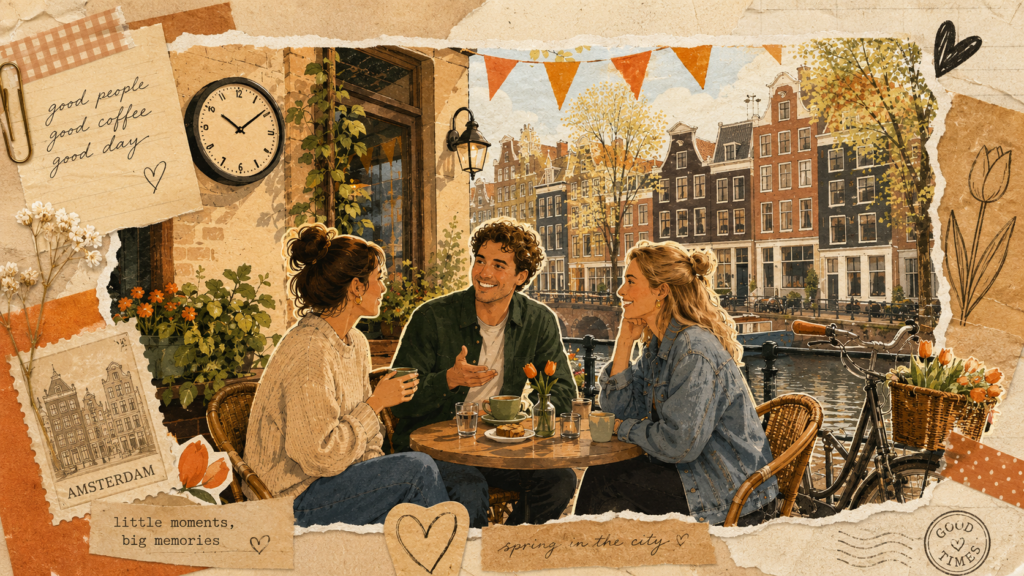
Clear, direct and on time
People may say exactly what they think and often appreciate a clear, respectful answer in return. For meetings, visits and appointments, try to arrive on time. Send a quick message when you are delayed. Social activities are also commonly planned in advance, even when meeting friends.
Fun Dutch habits
- Gezellig is a popular Dutch word for a warm, friendly and pleasant atmosphere. A café, dinner, neighbourhood event or quiet evening together can all be gezellig. Learn more about gezellig.
- At birthday gatherings, you may hear gefeliciteerd—“congratulations”—said not only to the birthday person, but also to family members and other guests. Read about Dutch birthday traditions.
- On King’s Day, people wear orange and enjoy music, celebrations and street markets called vrijmarkten. Discover King’s Day
Good to know
These are common cultural patterns, not strict rules. People, families and neighbourhoods are different. Observe, ask when you are unsure, and give yourself time to feel at home.
Cycling is part of everyday life
In the Netherlands, bicycles are used for much more than exercise. People cycle to work, school, shops, train stations and social visits. Around 27% of all journeys in the country are made by bicycle.
Dutch cities have extensive cycle routes, but busy intersections can feel unfamiliar at first. Start with quiet streets, practise signalling and take time to understand the signs and road markings. Read about cycling in the Netherlands.
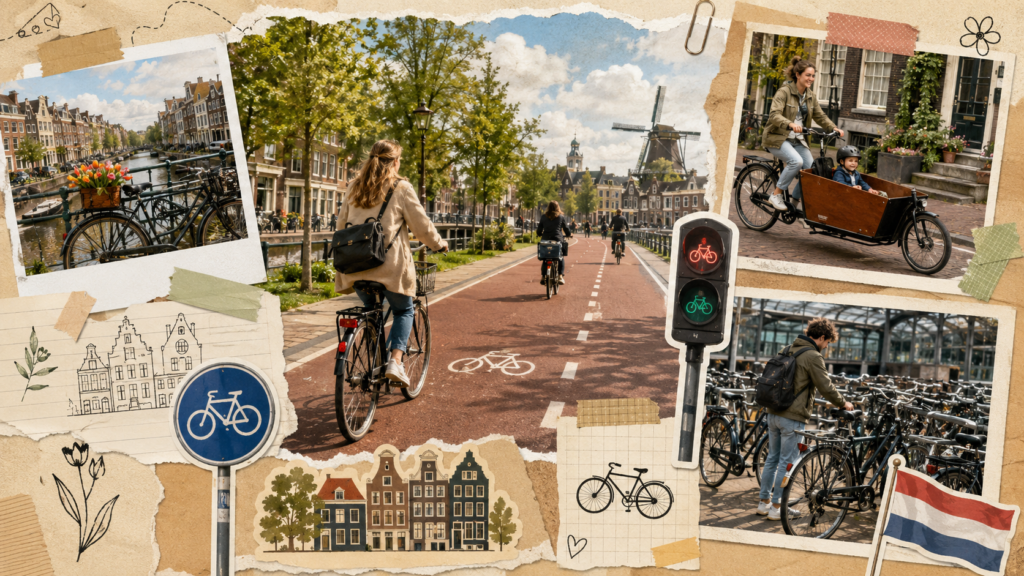
Ride like a local
Use the cycle path when one is available. Keep to the right and pass other cyclists on the left. Before turning, look around and extend your arm to show which direction you are going. Two people may cycle side by side, but not when this blocks or delays other traffic.
Do not cycle on the pavement unless signs clearly permit it. View the official guide to participating in Dutch traffic.
Safety basics
- Follow traffic lights and give way where road markings or signs require it.
- Do not hold a phone while cycling. Stop somewhere safe before checking messages or directions.
- Use a white or yellow front light and a red rear light in darkness or poor visibility.
- Make sure your lights are visible and do not flash.
- Park in a bicycle rack or designated parking area, especially near stations and busy centres.
Good to know
Waste and recycling
Household waste collection is organised by your municipality. Collection days, container colours and the way plastic packaging is handled can differ from one city or neighbourhood to another.
Check your local afvalkalender or afvalwijzer before putting anything outside. Your municipality may collect waste from your home or use shared underground containers in the street. Read What belongs in which bins.
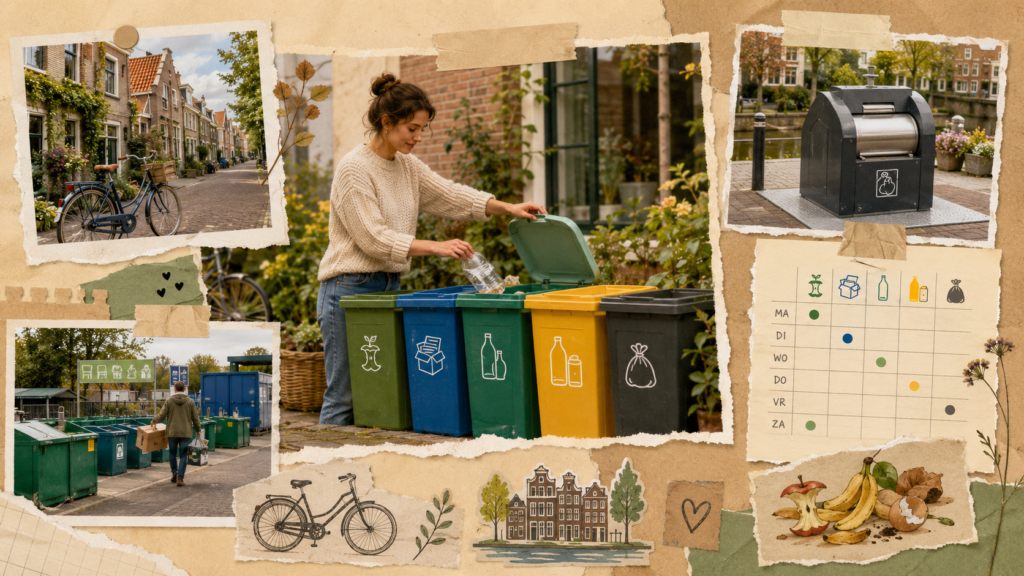
Start with your local rules
Municipalities are responsible for household waste collection and may organise it differently. Large household waste can usually be collected by appointment or taken to a municipal recycling centre. Read about disposing of bulky waste.
What usually goes where?
- GFT: vegetable and fruit scraps, food waste and garden waste
- Paper and cardboard: clean and dry paper, boxes and packaging
- Glass: empty glass bottles and jars—not drinking glasses, mirrors or ceramics
- PMD: plastic packaging, metal packaging and drink cartons, where your municipality collects these separately
- Textiles: clean and dry clothes, shoes and household textiles
- Restafval: waste that cannot be reused or collected separately
Use the Afvalscheidingswijzer to search for the correct bin or collection point for a specific item.
Good to know
Payments!
In the Netherlands, people commonly pay by debit card, contactless card, phone or smartwatch. Cash is still accepted in many places, although some shops, parking facilities and other businesses may display “PIN only” or “Geen contant geld”. Check the sign near the entrance or payment terminal when unsure. Learn how payments work in the Netherlands.
For online shopping and bills, you will often see iDEAL | Wero. It lets you approve a direct payment from your own bank account through your banking app or online banking environment. See how iDEAL | Wero work.
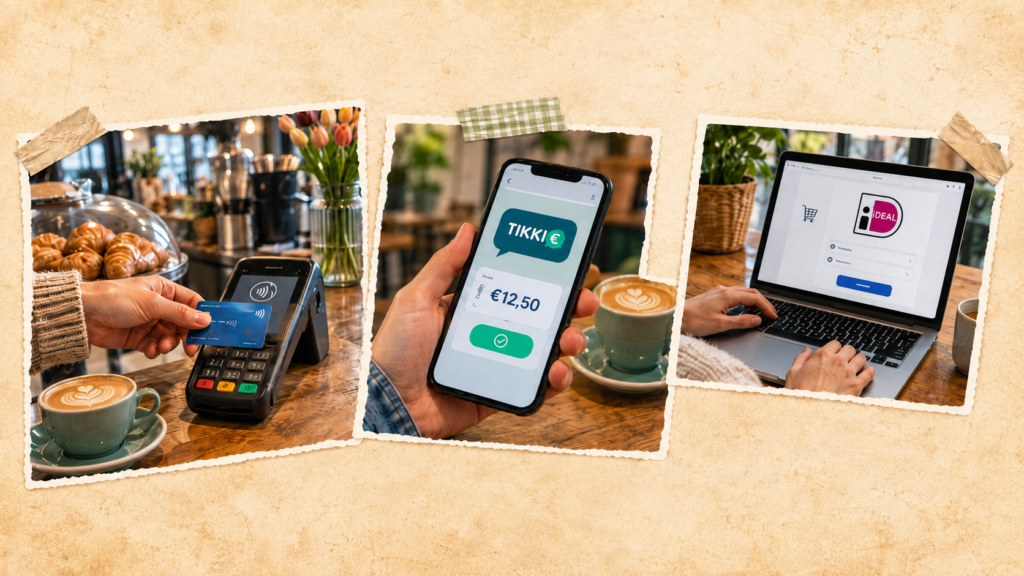
What is a Tikkie?
A Tikkie is a digital payment request. It is often used when someone has paid in advance for dinner, drinks, tickets, groceries or a shared gift.
The sender creates the request in the Tikkie app and shares the link through WhatsApp, text message or another messaging service. The recipient opens the link, checks the amount and pays through their own bank using iDEAL | Wero. Learn how Tikkie works.
Pay safely
- Check the recipient, amount and description before approving any payment.
- Only pay a request you recognise and were expecting.
- Never share your PIN, banking password, login code or card details.
- Be cautious when someone asks you to transfer a small amount, such as €0.01, to “verify” your bank account.
- When buying from a stranger, use the secure payment system provided by the marketplace whenever possible.
- A genuine Tikkie link uses the official tikkie.me domain, but you should still check who sent it and why.
Good to know
Fraudsters sometimes send links that imitate legitimate payment services. Read the official warning about payment-request fraud.
