Start in the Netherlands
Your first steps, made simple.
Everything you need to arrange when you arrive in the Netherlands.
Clear explanations | Step-by-step guidance | Based on official information
Essential first steps in the Netherlands
Click a step to see what applies to you, what to arrange, and where to find the correct official information.
Before arranging anything else, check which immigration rules apply to you. This depends mainly on your nationality, how long you plan to stay, and why you are moving to the Netherlands.
Which situation applies to you?
Select the option that best describes your situation. Your personalised guidance will appear below.
What this means
As an EU, EEA or Swiss citizen, you can normally live and work in the Netherlands without a visa, Dutch residence permit or work permit.
If you stay longer than 3 months, you must meet EU residence conditions. This means you must work, study, be self-employed, or have sufficient resources and health insurance.
Family members
If your partner or family members are not EU, EEA or Swiss citizens, they may need different entry or residence documents.
What to arrange next
Official next step
Check the complete residence rules for EU, EEA and Swiss citizens.
What this means
A short stay means visiting the Netherlands and the Schengen Area for no more than 90 days within any 180-day period.
Whether a Schengen visa is required depends on nationality, passport and travel plans. A short stay may be for tourism, visiting family or friends, business or another temporary purpose.
Working during a short stay
A short-stay visa or visa-free entry does not automatically give you permission to work. Your employer may need to arrange a Dutch work permit.
What to arrange next
Official next step
Check whether you need a visa and review the official short-stay rules before making travel arrangements.
What this means
In this case, you will usually need a Dutch residence permit. Depending on your nationality and situation, you may also need an MVV entry visa before travelling.
The exact residence route depends on your purpose of stay, such as joining a partner or family member, studying, work, highly skilled migrant status, self-employment or another specific purpose.
Your purpose of stay matters
Different documents, fees and conditions apply depending on why you are moving. Always check the official residence permit route.
What to arrange next
Official next step
Use the official IND pages to find the residence route that matches your situation and check whether an MVV applies.
What this means
If you want to apply for asylum, you can request protection if you fear persecution or serious harm in your home country because of your race, religion, nationality, political opinion, sexual orientation, gender identity or membership of a particular social group.
You have the right to apply for asylum regardless of how you entered the country. The IND (Immigration and Naturalisation Service) will assess your application.
During the asylum procedure
While your application is being assessed, you will receive shelter, food and basic healthcare through the Central Agency for the Reception of Asylum Seekers (COA). You may be placed in an asylum seeker centre.
What to do next
Official next step
Apply for asylum at an IND desk. This is the official first step in the asylum procedure.
What this means
If the IND has granted you asylum, you receive a Dutch asylum residence permit. This gives you the right to live in the Netherlands. Your residence document shows your asylum status, your right to work, and the document’s expiry date.
Your right of residence continues unless the IND decides to withdraw it. Under the rules introduced on 12 June 2026, a newly issued asylum residence document is generally valid for three years. Renewing the card does not mean that you must apply for asylum again.
It is no longer possible to apply for a new permanent asylum residence permit. After at least five years of lawful residence, you may instead qualify for a residence permit for long-term EU residents if you meet all the conditions.
Your rights include
Live and work in the Netherlands. Access healthcare and education. Look for independent housing. Apply for family reunification if eligible.
What to do next
Official next step
Read the official IND information about your residence document, right to work, renewal, family reunification and possible future residence options.
Municipal registration is separate from your visa or residence permission. If you will live in the Netherlands for more than four months, register as a resident in the BRP. If you live abroad, or will stay in the Netherlands for less than four months, you normally register in the RNI only when you need a BSN or have dealings with Dutch authorities—for example, for short-term work, study, an internship, tax or another official matter.
Which registration applies to you?
Choose the situation that best describes your stay.
What this means
If you plan to live in the Netherlands for more than four months, you must register as a resident in the Personal Records Database (BRP) with the municipality where you will live. You must normally register in person within five days of arriving in the Netherlands.
After registration, the municipality records your personal details and Dutch address in the BRP. If you do not already have one, you will automatically receive a BSN (citizen service number).
Prepare for your appointment
Check your municipality’s website before your appointment. The exact requirements depend on your municipality, country of origin and personal situation.
What to arrange next
Official next step
Check your municipality’s appointment page before you go.
What this means
If you do not live permanently in the Netherlands but need a BSN for an official reason.
This may apply if you are in the Netherlands temporarily for work, study or an internship, or if you live abroad but need to deal with Dutch authorities such as tax, pension or other official matters.
A tourist visiting the Netherlands for a short holiday does not normally need this registration.
Important
RNI registration gives you a BSN. It does not give you permission to enter, live or work in the Netherlands.
Check your visa, residence and work rules separately in Step 1.
What to arrange next
Official next step
Check whether RNI registration is right for your situation, find an RNI desk and review what you must bring.
What this means
If you are already registered as a resident in the BRP and are moving to another address in the Netherlands, You must report your new address even when you remain in the same municipality. If you move to another municipality, report the move to your new municipality; it will update the BRP and arrange your deregistration from the previous municipality.
Report your move on time. The moving date you provide becomes the official date of your address change.
Moving abroad instead?
If you will live outside the Netherlands for more than eight months within a one-year period, you must deregister from your Dutch municipality. This rule also applies if you keep your home in the Netherlands.
What to arrange next
Official next step
Report your move through the municipality responsible for your new address and check which documents it requires.
What this means
Your citizen service number, called a BSN, is the unique personal number under which you are registered with the Dutch authorities.
You use it when arranging official matters such as taxes, healthcare, education, benefits and pension matters. You receive a BSN only once. It remains valid and does not change, even if you move abroad and later return.
BSN and DigiD are different
– Your BSN is your personal identification number.
– DigiD is the secure login you use to arrange government, healthcare, education and pension matters online.
– After receiving your BSN, you can apply for DigiD in the next step.
How you receive your BSN
Where can I find my BSN?
You may find your BSN on a Dutch passport, identity card or driving licence. It may also appear on documents such as a Dutch payslip, annual salary statement or health insurance policy.
Official sources
Check how to obtain your BSN or find an existing number before continuing to DigiD.
What this means
DigiD is your personal digital login for Dutch government services. You use it for things like healthcare, taxes, municipalities, education and pension matters.
MijnOverheid is your personal online government portal. After signing in with DigiD, you can view your government messages, personal details and connected organisations in one place.
Keep it personal
– Never share your DigiD username, password or app access.
– Use your own email address and phone number if possible.
– Turn on message notifications in MijnOverheid.
What to arrange next
Official next step
Apply for DigiD first, then sign in to MijnOverheid.
What this means
Everyone who lives or works in the Netherlands must have basic health insurance (zorgverzekering) from a Dutch insurer.
This insurance covers essential medical care, such as visits to the GP, hospital care and medicines. You can also choose additional insurance for extra coverage, for example dental care or physiotherapy. Late registration can lead to a CAK fine.
Important to know
– Arrange basic insurance within 4 months.
– Add children under 18 to a parent’s policy.
– You can usually switch insurer at the end of the year.
How it works
Where to compare and apply
You can compare and apply for health insurance via independent comparison websites or directly with insurers.
Official sources
Compare your options and take out basic health insurance with an approved Dutch insurer.
What this means
A GP (huisarts) is your general practitioner.
You need to register with a GP practice in your area.
They provide general medical care and can refer you to specialists if needed.
Important to know
– Registering with a GP is free.
– Choose a practice that is close to your home.
– You may need to show your BSN and ID.
– Some practices have a waiting list.
Tip
Not sure which GP to choose? Ask neighbours, colleagues or check reviews online.
How it works
Where to find a GP
Use these websites to find and compare GP practices in your area.
Official sources
Reliable information about GP care in the Netherlands
What this means
A payment account usually gives you an IBAN, a debit card and access to mobile or internet banking. You can use it to receive salary, pay rent and bills, make transfers and pay online with iDEAL or a debit card.
What you may need
- A valid passport or identity document
- Your Dutch address or other address details
- Your BSN, when requested A residence document, when applicable
- A phone for identity checks and mobile banking
If a regular account is not available
In principle, an EU resident who cannot obtain a standard payment account may be entitled to a basic payment account. A bank must still verify your identity and follow legal checks.
How it works
Pay and bank safely
- Never share your PIN, password or verification code.
- Check that a bank or payment provider appears in DNB’s public register.
- Money at Dutch banks is generally protected up to €100,000 per person, per bank.
Official sources
Check licensed providers and compare the payment account features that matter to you
What this means
- You pay tax if you have income, such as from a job or business.
- The tax you pay may be used for public services like healthcare, education and infrastructure.
- Depending on your situation, you may be eligible for allowances or benefits.
Common taxes in the Netherlands
- Income tax (inkomstenbelasting): on income from work, business or benefits.
- Wage tax (loonheffing): usually withheld by your employer.
- VAT (btw): included in most goods and services you buy.
Possible allowances (toeslagen)
Depending on your situation, you may be entitled to:
- Zorgtoeslag — healthcare allowance
- Huurtoeslag — rent allowance
- Kinderopvangtoeslag — childcare allowance
- Kindgebonden budget — child-related budget
These allowances depend on conditions such as income, assets, household and personal circumstances. You must apply yourself. Allowances are not paid automatically.
Important to know
Report changes that may affect your tax or allowances on time to avoid repayment later. Providing incorrect information can lead to repayment of allowances and a fine.
How it works
Official sources
Belastingdienst (Tax and Customs Administration) and Government of the Netherlands · Last reviewed: July 2026

Understand the routes and prepare for the exams
Visit our Inburgering page for clear guidance and free practice
Route overview
Exam process
Exam-style practice
Answers and tips
Official sources
Check the official information and your personal DUO information . Last reviewed: July 2026
Where to go for support
Here are places that may best match what you need. We link only to trusted sources.
1. Municipality (Gemeente)
Find official information about local services, newcomer support and organisations in your municipality.
What you can find
Official source
This is the official Overheid.nl register of Dutch municipalities and their contact details.
Good to know
Each municipality offers different services, so always check your own gemeente website.
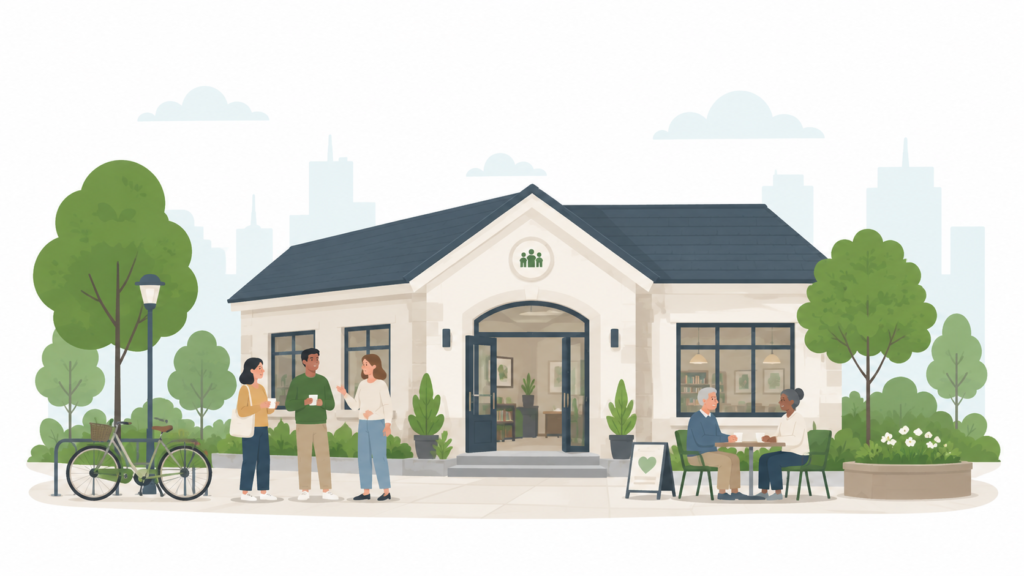
2. Neighbourhood centres & community houses (Buurthuizen)
Find recommended buurthuizen, wijkcentra, community activities and local meeting places in your city.
What you can find
Explore by city
Use our City Guides to find community spaces and local activities in Amsterdam, The Hague, Rotterdam and Utrecht.
3. Volunteer organisations
Find a trusted local volunteer centre that can help you discover suitable opportunities and organisations nearby.
What you can find
Trusted national source
VrijwiligerswerkNL offers a postcode and map search for recognised local volunteer centres and support points.
4. Language cafés (taalcafés) & conversation groups
Find taalcafés, conversation groups and informal Dutch-language practice selected for your city.

What you can find
Explore by city
Use our City Guides to find informal Dutch-language practice in Amsterdam, The Hague, Rotterdam and Utrecht.
Or prefer to learn at your own pace?
5. Libraries & practical help
Search by postcode for library activities, digital help, government-service support and local courses.
What you can find
Trusted source
HetInformatiepunt.nl is supported by the Koninklijke Bibliotheek (KB), the National Library of the Netherlands, and helps you find local practical support.
Good to know
Many libraries offer more than books, including practical support, courses and help with digital government services.
You are not alone.
Many newcomers have walked this path before you.
Trusted organisations and community spaces are here to offer information,
practical help and a place to connect.
